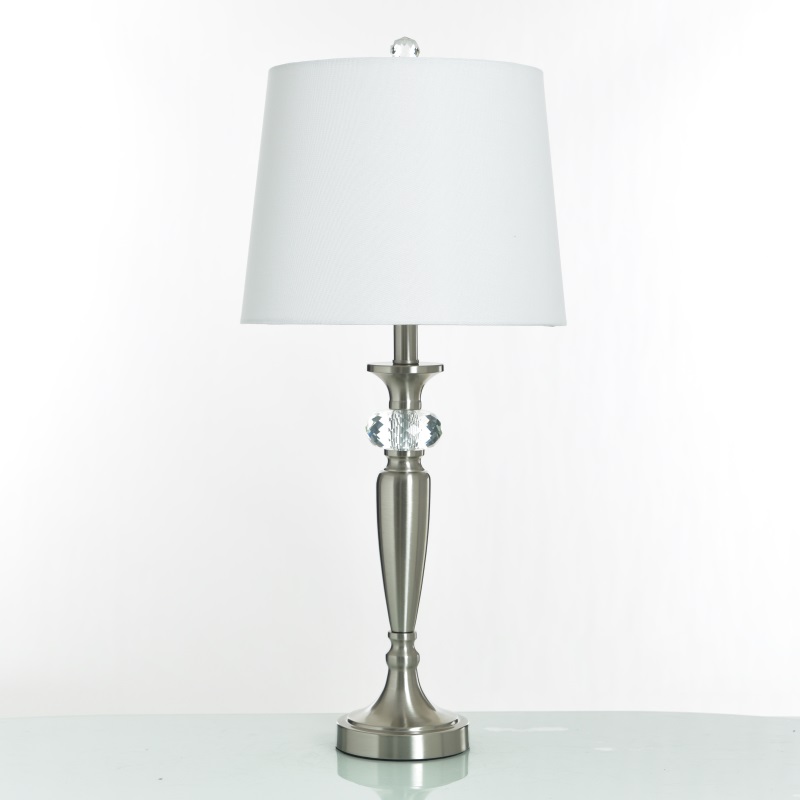
How does a Touch-Sensitive Table Lamp Work?
A touch-sensitive table lamp uses an internal electronic touch IC and electrodes at the touch point to form a control circuit. When a person touches the electrodes, the touch signal is transmitted via pulsating DC power to the touch sensor, generating a pulse signal that is then transmitted to the touch sensor. This triggers a pulse signal, turning the light on.

If the person touches the lamp again, the touch signal is transmitted via pulsating DC power to the touch sensor, causing it to stop emitting trigger pulses. When the AC power passes through zero, the lamp turns off. However, the lamp may occasionally light up on its own after a power outage or voltage fluctuation. If the touch signal is sensitive enough, paper or cloth can also be controlled.